
Messier Objects Tonight
Messier objects are a set of 110 astronomical objects cataloged by the French astronomer Charles Messier in the 18th century. These objects include a variety of celestial phenomena such as star clusters, nebulae, and galaxies. The catalog was created to help astronomers distinguish between permanent and transient objects in the night sky. Some of the most famous Messier objects include the Andromeda Galaxy (M31), the Orion Nebula (M42), and the Pleiades star cluster (M45). The Messier Catalog remains a popular reference for amateur and professional astronomers alike.Sky Map
Celestial bearing and elevation at 02:29
This interactive sky map shows the positions of the brightest celestial objects from your location. Move it horizontally to follow how their positions change through the night.
M44
Open Cluster
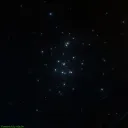
The Beehive Cluster, an open star cluster containing over 1,000 stars, located approximately 577 light-years away in the constellation Cancer.
Orion Nebula (M42)
Star cluster + Nebula
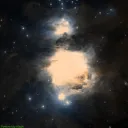
The Orion Nebula, a bright emission nebula and star-forming region, containing over 700 stars, located approximately 1,344 light-years away in the constellation Orion.
M47
Open Cluster
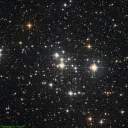
An open star cluster containing over 500 stars, located approximately 1,600 light-years away in the constellation Puppis.
M41
Open Cluster
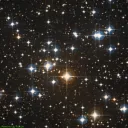
The Little Beehive Cluster, an open star cluster containing over 100 stars, located approximately 2,300 light-years away in the constellation Canis Major.
M35
Open Cluster
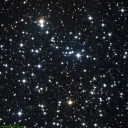
An open star cluster containing over 1200 stars, located approximately 2,800 light-years away in the constellation Gemini.
M34
Open Cluster
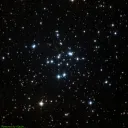
An open star cluster containing over 400 stars, located approximately 1,400 light-years away in the constellation Perseus.
M37
Open Cluster
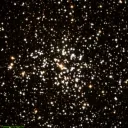
A rich open star cluster containing over 500 stars, located approximately 4,500 light-years away in the constellation Auriga.
M48
Open Cluster
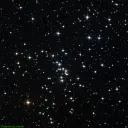
An open star cluster containing over 200 stars, located approximately 1,500 light-years away in the constellation Hydra.
M50
Open Cluster
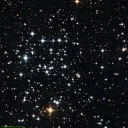
An open star cluster containing over 200 stars, located approximately 3,000 light-years away in the constellation Monoceros.
M36
Open Cluster
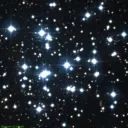
An open star cluster containing over 60 stars, visible to the naked eye under dark skies, located approximately 4,100 light-years away in the constellation Auriga.
M46
Open Cluster
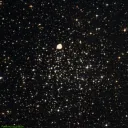
An open star cluster containing over 500 stars, located approximately 5,400 light-years away in the constellation Puppis.
M38
Open Cluster
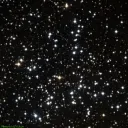
An open star cluster containing over 100 stars, located approximately 4,200 light-years away in the constellation Auriga.
M67
Open Cluster
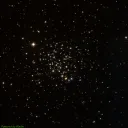
An open star cluster containing over 500 stars, located approximately 2,800 light-years away in the constellation Cancer.
M52
Open Cluster
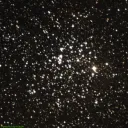
An open star cluster containing over 200 stars, located approximately 5,000 light-years away in the constellation Cassiopeia.
M103
Open Cluster
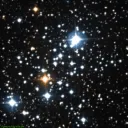
M103 is an open cluster with apparent magnitude 7.40 in the constellation Cassiopeia, spanning approximately 4.5 arcseconds in the sky.
M78
Reflection Nebula

A reflection nebula containing a young star cluster, located approximately 1,600 light-years away in the constellation Orion.
M32
Galaxy
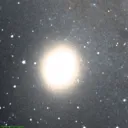
A satellite galaxy of the Andromeda Galaxy, containing approximately 3 billion stars, located approximately 2.537 million light-years away.
Crab Nebula (M1)
Supernova remnant
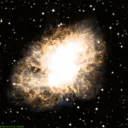
The Crab Nebula, a supernova remnant, known for its filaments of glowing gas and energetic pulsar at its core.
Cigar Galaxy (M82)
Galaxy
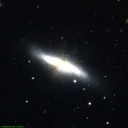
Starburst galaxy undergoing intense star formation, notable for its irregular shape.
Owl Nebula (M97)
Planetary Nebula
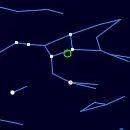
Planetary nebula known as the Owl Nebula due to its distinctive shape.
Data Credits
The deep-sky information on this page comes from the OpenNGC project developed by Matteo Verga. OpenNGC provides detailed catalog data for nebulae, galaxies, clusters and other deep-sky objects.
For details or contributions, visit the official repository: OpenNGC GitHub.